How to Price a Wedding Cake: Factors and Menu Examples
- Published
- min read
- 5
Wedding cake pricing looks mysterious from the outside, but inside a studio it is mostly arithmetic: servings, labour hours, ingredients, delivery and the risk of a design that has to survive a car ride and a warm room. Get those numbers in the right order and the quote almost writes itself.
Below is how we build a wedding cake menu—what moves the price, how we structure tiers and packages, and the per-serving ranges you can expect to see on a real studio price list.
Start With Servings, Not Tiers
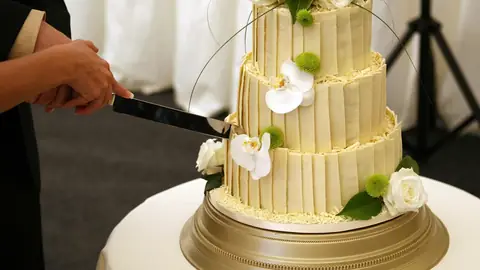
Every quote begins with the guest count. A three-tier cake at 6, 8 and 10 inches yields roughly 50 to 60 dessert portions; four tiers at 6, 8, 10 and 12 inches lands near 90 to 100. Those numbers assume standard 1-inch by 2-inch cuts for a dessert course and closer to 1-inch by 1-inch finger portions when cake follows a full dinner.
This is why two cakes that look identical can differ by hundreds of pounds: one serves 60, the other serves 120. When couples ask for a price before a guest count, we quote per serving and explain the multiplier. Pricing per portion also keeps the conversation honest when a design grows mid-planning.
Tier count still matters for cost, but for a different reason—each tier adds covering, stacking, board and dowel work, so extra tiers raise the price per serving even when the total served stays flat.
- 6/8/10-inch tiers: roughly 50–60 dessert servings
- 6/8/10/12-inch tiers: roughly 90–100 dessert servings
- Finger portions after a full meal: add 20–30% more servings per cake
The Factors That Actually Move the Price
Ingredients are the visible cost and rarely the biggest one. Butter, free-range eggs, real vanilla, couverture chocolate and fresh fruit add maybe 15 to 25% to a basic sponge recipe, but a premium flavour like pistachio, passionfruit curd or salted caramel can push ingredient cost up by a third. Fondant, gold leaf and hand-painted finishes cost more than buttercream in both materials and time.
Labour is the real driver. A clean buttercream finish might take 3 to 5 hours; sharp-edged fondant with sugar flowers can take 15 to 25 hours across several days. Sugar flowers are usually priced individually—£4 to £12 per bloom is a common range for hand-made roses and peonies—and a cascading arrangement can add more than the cake itself.
Then come delivery, setup and seasonality. A 90-minute drive with a tiered cake requires a level boot, a cool box and a two-person carry, and many studios charge £0.60 to £1.20 per mile each way beyond a local radius. June, September and December dates often carry a modest premium—5 to 15% is typical—because demand outpaces available weekends.
- Buttercream finish: lower material cost, moderate labour
- Fondant or textured finish: higher labour, heavier cake
- Fresh flowers: cheap, but require wrapping and food-safety care
- Sugar flowers: priced per bloom, often £4–£12 each
- Delivery beyond 30 miles: usually charged per mile
Building a Per-Serving Price Ladder
Most studios run three or four price bands rather than quoting every cake from scratch. A simple tiered buttercream cake with a smooth finish and minimal piping typically sits at £5 to £7 per serving. Add textured buttercream, a drip or a simple palette-knife design and you move to £7 to £9. Fondant with sharp edges, metallic detailing or a semi-naked finish with fresh fruit lands around £9 to £12.
The top band—£12 to £18 per serving and up—covers sculpted work, hand-painted panels, extensive sugar florals or anything requiring a structural build. These cakes are effectively bespoke commissions and should be quoted per project after a tasting.
Publishing a ladder does two useful things: it filters enquiries before a consultation, and it gives couples a way to trade design complexity against guest count without feeling talked into an upsell.
- £5–£7 per serving: smooth buttercream, simple piping
- £7–£9 per serving: textured finishes, drip, fresh fruit
- £9–£12 per serving: fondant, metallic, semi-naked
- £12–£18+ per serving: sculpted, painted, heavy florals
Sample Menu Structure for a Studio
A workable wedding menu has four blocks: flavours, sizes, finishes and extras. Under flavours, list three to five included options—vanilla and raspberry, lemon and elderflower, chocolate and salted caramel—and charge a supplement for premium ones such as pistachio or fresh berry compote. Keep the included list short so the kitchen stays efficient and the shopping list stays predictable.
Sizes should be expressed as servings first and tiers second. 'Serves 80, three tiers' is clearer than 'three-tier cake' and prevents the awkward conversation where a couple assumes a tall cake feeds a marquee. Add a cutting cake option for couples who want a display centrepiece plus easy back-of-house portions; a 10-inch cutting cake serving 30 to 40 is a popular add-on.
Finishes and extras carry the margin. List buttercream as standard, then price fondant, gold leaf, sugar flowers, macaron clusters, cake stands, delivery and setup separately. A small dessert table of macarons or mini tarts often adds £3 to £5 per head—worth explaining clearly, since macaron pricing surprises many couples.
- Flavours: 3–5 included, supplements for premium
- Sizes: servings first, tiers second
- Finishes: buttercream standard, others priced
- Extras: flowers, macarons, stand hire, delivery and setup
| Finish level | Price per serving | Typical labour | Best for |
|---|---|---|---|
| Smooth buttercream, simple piping | £5–£7 | 4–6 hours | Intimate weddings, 50–70 guests |
| Textured buttercream, drip, fresh fruit | £7–£9 | 6–10 hours | Rustic and modern themes |
| Fondant, sharp edges, metallic detail | £9–£12 | 10–16 hours | Formal ballrooms, 100+ guests |
| Semi-naked with fresh florals | £8–£11 | 7–12 hours | Barn and garden venues |
| Sculpted, painted or heavy sugar florals | £12–£18+ | 18–30 hours | Statement centrepieces, bespoke commissions |
Deposits, Tastings and Realistic Timelines
A standard booking structure is a 25 to 50% non-refundable deposit to secure the date, with the balance due two to four weeks before the wedding. Tastings are usually free for booked couples and £20 to £40 for enquiries, deducted from the deposit if they book. Build the tasting cost into your margins rather than treating it as pure marketing.
Timing affects pricing more than couples expect. A cake booked eight to twelve months out can be scheduled across quiet days; a four-week request often means overtime and rush charges of 10 to 20%. If you are still working out when to start the conversation, how far in advance to book a wedding cake covers the practical timeline in detail.
Finally, budget for delivery and display. A stand, a level table and a cool room are not optional extras—they are part of the product. Our venue display checklist is the document we send with every confirmation.
- Deposit: 25–50% to hold the date
- Balance: due 2–4 weeks before the event
- Tasting: free when booked, £20–£40 otherwise
- Rush orders: 10–20% supplement inside four weeks
Where Couples Commonly Overspend
The two biggest overspends are sugar flowers on a cake that will be cut at 9pm in low light, and extra tiers purely for height. Both look spectacular in photographs and add hundreds to the invoice. A taller cake with a hidden dummy tier costs far less than a fully baked tier and delivers the same silhouette—worth offering openly rather than waiting for a couple to ask.
The third is delivery. Couples sometimes assume they will collect the cake. For a single tier that can work; for three or more, it rarely ends well. Our guide to transporting a tiered cake safely by car explains what a warm car and a sloped drive do to buttercream, and it is a useful thing to share when a couple raises collection as a cost-saving.
- Dummy tiers give height without the serving cost
- Sugar flowers read poorly in low evening light
- Collection is risky above two tiers
- Fewer, better flavours often cost less than a long menu
Key points
- Price per serving first, then translate into tiers for the couple.
- Labour and delivery usually outweigh ingredient costs.
- Publish three or four finish bands to filter enquiries and speed up quoting.
- Charge separately for sugar flowers, macarons, stands and mileage.
Wedding Cake Portion Calculator
This calculator estimates how many servings a tiered wedding cake provides based on tier count, tier diameter and slice size. It also suggests a suitable tier count for your guest list.